
Door Slams Still Spike My Nervous System Through Headphones
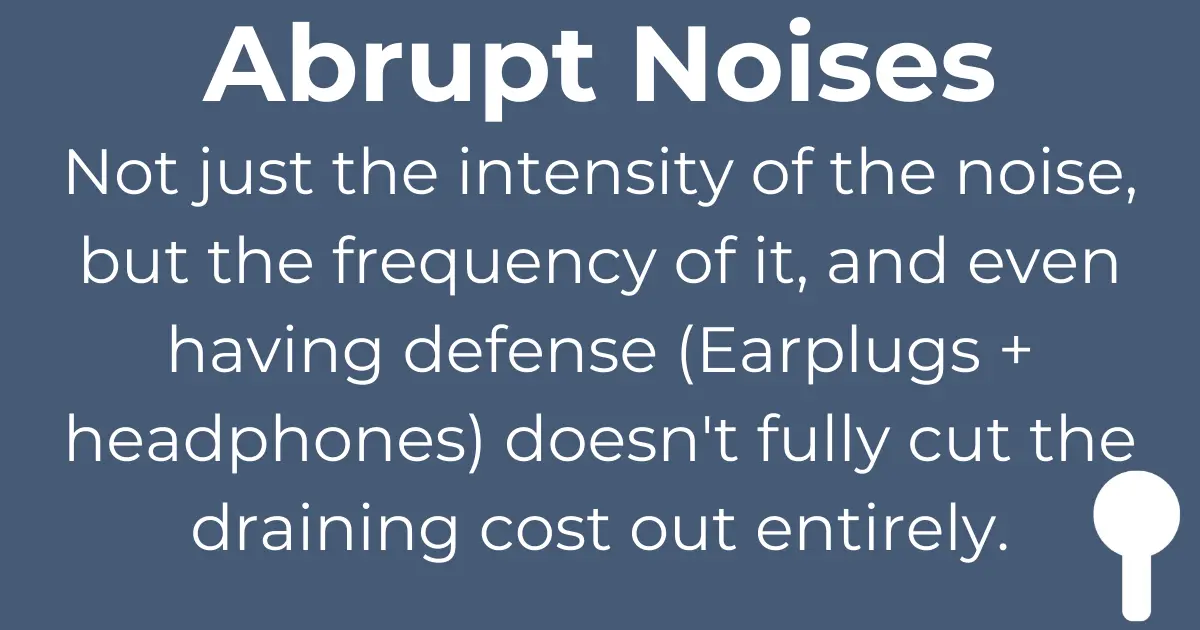
Headphones (Nor combined with earplugs) don’t fix abrupt noises for me. Door slams still cost me most of my energy during the day and it doesn't take many intervals for that to happen.
The moment I realized it
I tried putting on headphones to drown out the constant opening and shutting of doors in my family house. The slamming of cabinets, and the abrupt sounds of laughter across the room.
I often get exhausted really quickly by how constant and exhausting it is for me. Despite having hearing protection on.
My nervous system still treats it like a threat because it’s sudden and unpredictable, so it makes me aware of when it happens, and intensifies the impact, making it even worse.
I was quick to notice that the sudden opening and shutting of doors was overwhelming me since I've been in autistic burnout for over 5 years now.
It's sudden, abrupt, and it constantly goes on and on, and no amount of white noise and noise cancelling running on my headphones drowns it out.
My body reacts anyway
My body immediately tenses up, and I feel a few seconds away from having an silent meltdown, from the sheer unpredictability of it, and how loud it is.
I don’t know if it's going to happen again seconds later, or half an hour later.
My heart rate rises and I have to immediately stop whatever I'm doing to quickly go outside and calm myself down. Taking some time to walk outside, or even a few steps away from my families house since I still often hear it from that range.
We shouldn't have to aggressively alter our lives due to something we can't fully control, yet still pay the energy cost for it regardless.
Even if I’m doing something calming—reading or playing a game—one door slam resets me. My executive function drops and I can’t stay on the task. I have to step away from my computer to recover.
Someone’s on the phone loudly, people still try to get my attention, and I have to mask through it while I’m already overloaded. That makes recovery slower.
We shouldn't have to aggressively alter our lives due to something we can't fully control, yet still pay the energy cost for it regardless.
About Me
I'm Omari, a 23-year-old autistic adult who's been managing chronic burnout for 5+ years while working warehouse shifts.
I'm in autistic burnout recovery and I've still been on that recovery phase even after all of this time.;
My current environment is very unpredictable and exhausting and minimizing that unpredictability will help reduce the chance of me having multiple silent meltdowns on a weekly basis.
So tracking my energy helps for planning on my end, despite the drains themselves not going away as easily.
Launching April 2026. getspoons.app — One email when it's ready. No spam.
— Omari
Note: I'm sharing my personal experience as an autistic adult, not medical advice. If you're experiencing severe burnout or crisis, please consult a healthcare provider familiar with autism.