
I Forget to Eat at Work Until I Crash
A couple minutes after my break ends, my stomach is growling hard. I'm unable to focus and my exhaustion curve (on top of burnout) steepens even higher when I realize I haven't ate enough to fuel myself, especially right before bed.
My warehouse job has scheduled breaks. 9:15AM-9:30AM. 11:40AM-12:10PM. 2:40PM-2:55PM.
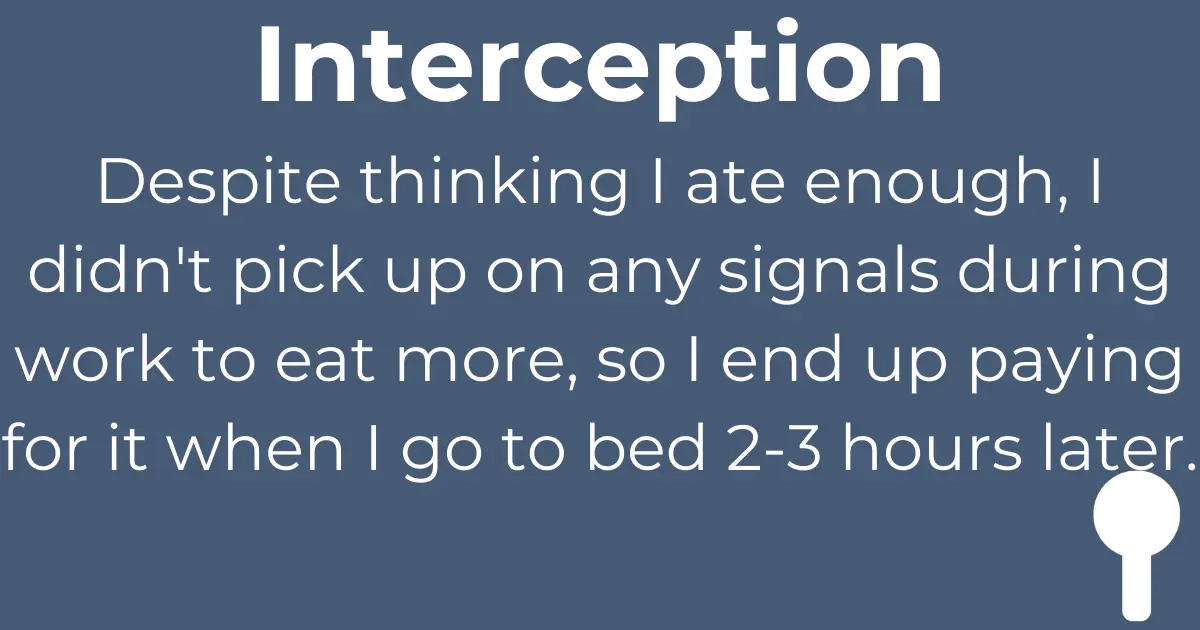
During this time often during the first break time I only eat a sandwich or two, or nothing at all. I don't feel hungry, so most of the time I just lie down or go back to work 1-2 minutes before my break is over.
Interoception Is the Invisible Drain
Interception is my body's ability to sense internal signals—hunger, thirst, fatigue. Since I'm already in burnout, detecting when I'm hungry or thirsty doesn't faze my mind until a few hours later. Moving my attention from one thing to the next when I'm constantly monitoring all of these signals while being very mentally exhausted really frustrates me. (On top of managing the procesing load of sounds and smells in my enviornment which gives me even more mixed signals)
It's another subtle but significant drain that made my other drains more impactful. Sensory overload due to transition costs—moving from station to station constantly every time I finish a package. Masking—dealing with coworkers that take my friendly attitude as a signal that I'm "available."
It's not something I'm ashamed of. I'm clearly exhausted and my mind is trying to compensate by reducing as many signals as possible to help my recovery.
Normally though, despite using earplugs (with an NRR rating of 33 decibels) helped a lot but didn't completely solve the problem, my hunger levels being low elevated that exhaustion. Using my app's energy slider context in mind: Starting at around 3 or 4 energy most days. I dropped to around a 2 before my second break arrived at 11:40AM. Compared to sitting around a 3 by the time my shift is normally over. (Very little energy to handle some things, but very few.)
The combination of the ongoing sensory overload despite the precaution I took combined with my hunger levels being low contributed to more energy being used just to focus and not have a meltdown. Since I was thinking about how hungry I am, that drew less attention to my hydration levels too.
I'm often lifting packages to my station weighing 20-40lbs, so this impacted me just as much if not more than my hunger levels did. My job expects me to be active all the time throughout the 10 hours I am there. (Giving the time off task pressure, and the pressure to keep moving. A manager even called this out when I was kneeling and trying to read my minecraft books I bought despite continously working during that time.)
The Cascade When I Get Home
Once I get home at around 6:00PM, I often end up binge eating a lot of sandwiches or preparing some basmati rice in my microwave. I pick up on the signals far too late. I end up eating a lot more to compensate for the little I ate during the day. I then wind down at around 6:30PM and go to bed strictly at 7:30PM. Eating too late and consuming too much often wakes me up during the night and degrades my sleep quality, which gives me less energy to recover for the next day.
On top of feeling more hungry regardless since my sleep quality wasn't good enough to restore my energy completely. I end up having to consume 400-600 more calories than I usually do due to compromised sleep and ongoing drains such as loud noises and abrupt sounds of laughter that my earplugs wasn't able to fully filter out.
All of this makes my burnout recovery slower and more tedious.
This is one of my many reasons I decided to build Spoons in the first place. I prioritize rest which helps improve my executive function, and as a result my hunger and hydration signals get stronger, allowing me to catch them sooner to help improve my energy levels & my recovery without exhausting myself further. (Helps with my energy baseline instead of slowly degrading it.)
Launching April 2026. getspoons.app - One email when it's ready. No spam.
— Omari
Note: I'm sharing my personal experience as an autistic adult, not medical advice. If you're experiencing severe burnout or crisis, please consult a healthcare provider familiar with autism.