
I've Quit Most Jobs Within a Month — It Was Never the Work
This post is about why I simply cannot switch to a better job and why it still costs me ton of energy just to go to work.
Months In Advance, I already knew
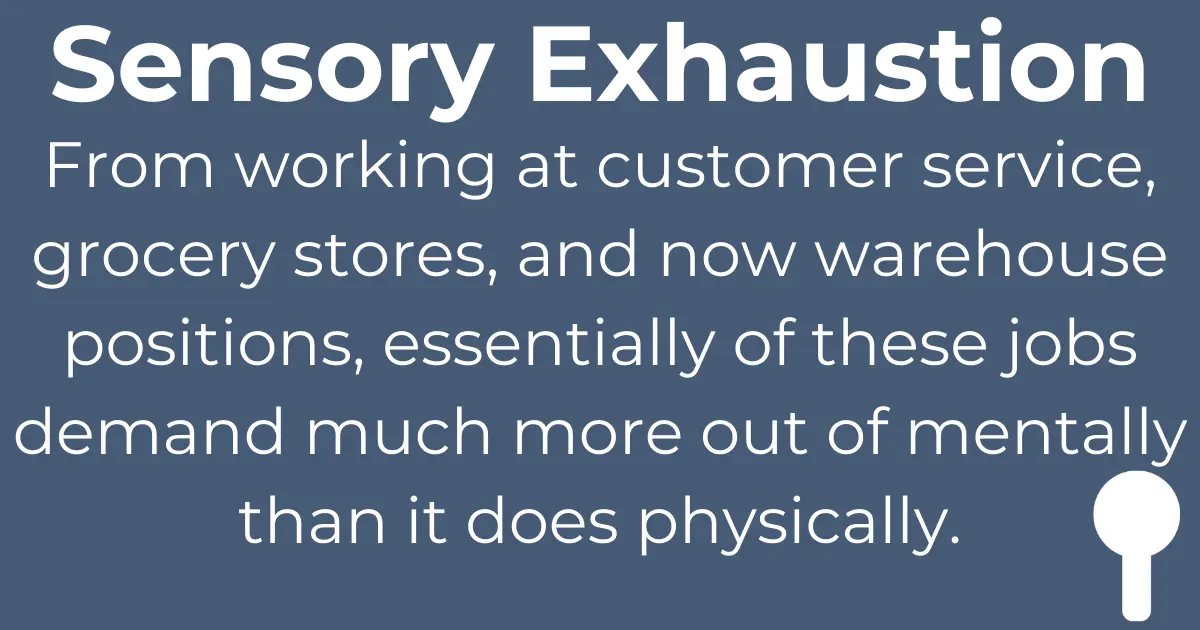
Months in advance, when working other jobs before I started my warehouse job, I realized that majority of jobs that I worked at barely accommodated me or were too draining to work at. I worked at Target, customer service, and at a grocery store, and I still ended up quitting most of them within a month or so due to the constant demands to mask and deal with small talk from management, often way more than the job itself. That exhausted me very quickly to the point of quitting.
When I worked near the counter at the Food Lion I used to work at, and customers would constantly bring up long conversations while I was working. It was expected, but it was still very exhausting and frustrating since it came up so much. I was trying to do my job and physically I was more than capable of doing so, but the mental of dealing with small talk far outpaced what I was able to handle it.
Using my app's 1-10 energy slider context in mind: I start most of my days at around 4 energy, I’m usually at around 2 or 3 energy by the time my shift is over since the mental demands vastly outweigh the physical one. The physical costs is really negilible since I already have a strong base of fitness and I have no fatique after work. But mentally, after dealing with being moved around from going outside to put carts and in and to handle groceries inside, and small talk, I don't have much energy to do anything else once my shift is over.
Main Drivers to me Quitting So Soon
Constantly navigating myself around customers in the grocery store, not knowing which aisle they are going through, whether or not they are going to be talking to me and for how long. Constantly having to plan around that, and still ultimately failing and dealing with the cost regardless is exhastuing.
Unpredictability was another main driver for me quitting, as the constant surge prices just to get to work and go home and have no other alternative (due to controlling parents) encouraged me to go look for another job a little under a month from when I started. Some days it could be 3 days, 4, or even 5 days that I'd have to come into work, so I'd be paying a whole lot more for ultimately the same amount of money earned, while the cognitive load of masking and navigating the enviornment and coworkers only went up.
The Costs of Exhaustion
For example it costs around $17–20 to get to work and another $17–20 to go home. The pay while working there is insufficient to cover that massive cost (Around $15 per hour when I worked there, 8 hour shift.), which scales above that price range most of the time.
I could schedule my ride to get a more predictable price and to be more likely that I could get to work on time, which did work well for the most part. But the rideshare price scaled to $25–30, which added up quickly since I worked 3–6 days a week. And I never knew if I was going to work more or less days, so It added on to the processing load that I was already dealing with and made quitting much more realistic only a few weeks in, which I ultimately ended up doing.
After Everything Is Over
I’m mentally exhausted and I don’t want to engage in anything that requires any cognitive output that demands my attention. Tasks that are most autonomous work just fine since I don’t have to think about it. (Like eating prepped food at home, or gaming on my computer (I often play Roblox)
Though as for chores such as cleaning dishes or organizing items on my countertop, I don’t end up doing it at all and just hope tomorrow I have enough energy to tackle it. If I do have to do it, I’ll simply place them anywhere that has space and just make my meal to eat, not really caring on how “good” it looks as long as it doesn’t exhaust me and it fills me up.
About Me
My name is Omari, a 23-year-old autistic adult who's been managing chronic burnout for 5+ years while working warehouse shifts.
I developed Spoons, an app to track my own energy in order track when certain events and job positions exhaust me more than I can recover with on my days off so that I can switch jobs such as warehouse work and have been doing so for over 2 years now.
I've been working at Amazon for roughly 3 years, and still has it's own share of problems, especially in regards to how I’m treated but the predictability and the ability to build my own schedule and work little hours on cognitive-heavy days made a massive difference on my mental health.
Launching on April 2026. getspoons.app - One email when it's ready. No spam.
— Omari
Note: I'm sharing my personal experience as an autistic adult, not medical advice. If you're experiencing severe burnout or crisis, please consult a healthcare provider familiar with autism.